
Set screws: 304 stainless steel vs 12.9 alloy, and how to size one
Set screws hold knobs, levers, collars and pulleys to a shaft, and they are the fastener most often missing when something spins free. Two questions decide the right one from a set screw assortment: what steel, and what size.
What a cup-point hex-socket set screw does
The cup point leaves a small ring of contact on the metal shaft, which grips harder than a flat point without gouging like a cone. The hex socket takes a key, so the screw can be tightened in the tight space under a handle where a Phillips or slotted head would be unreachable. Every set screw in a Hapric box is this type, cut and polished so the socket seats fully and does not round over.
304 stainless steel or 12.9 alloy
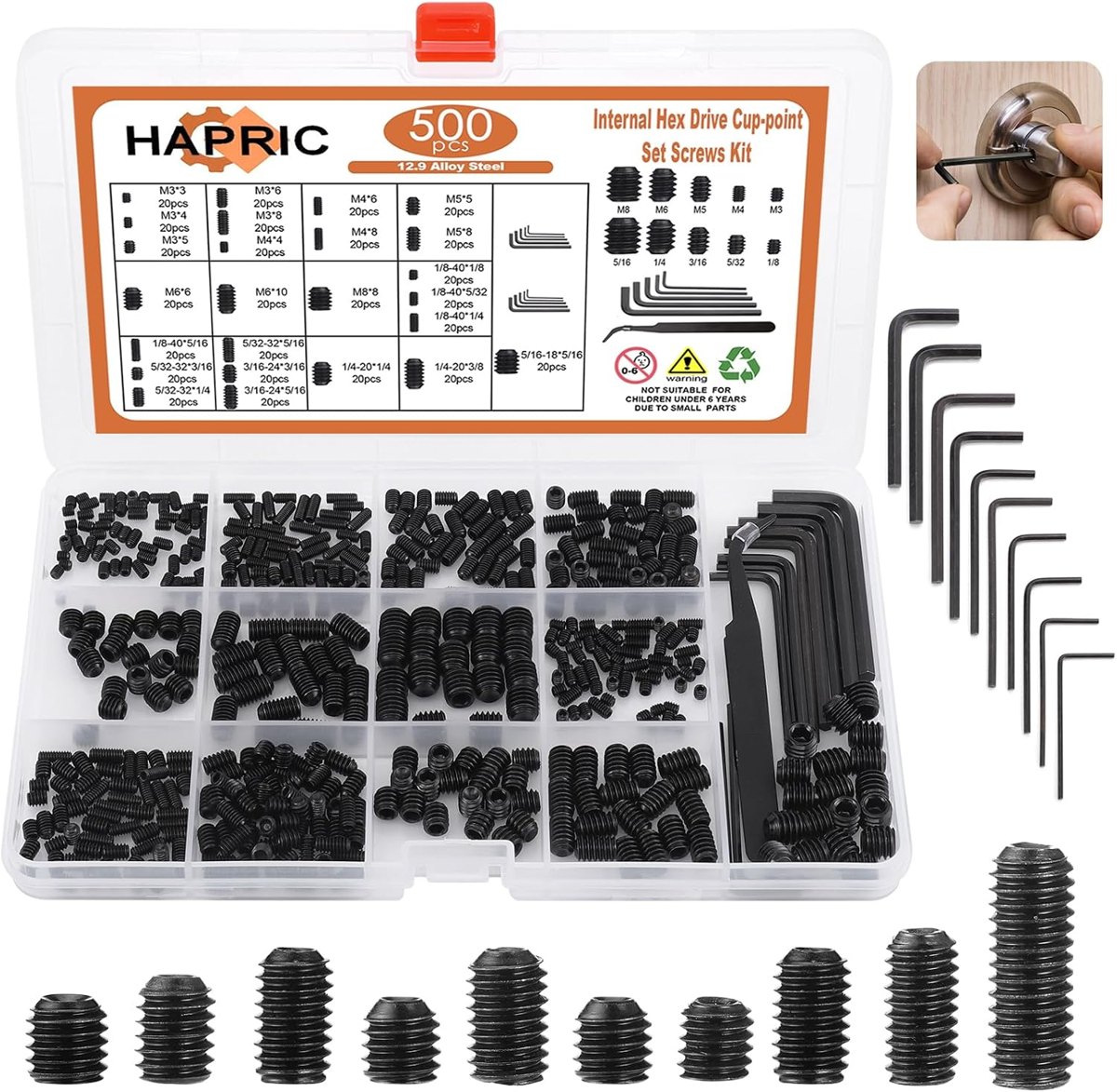
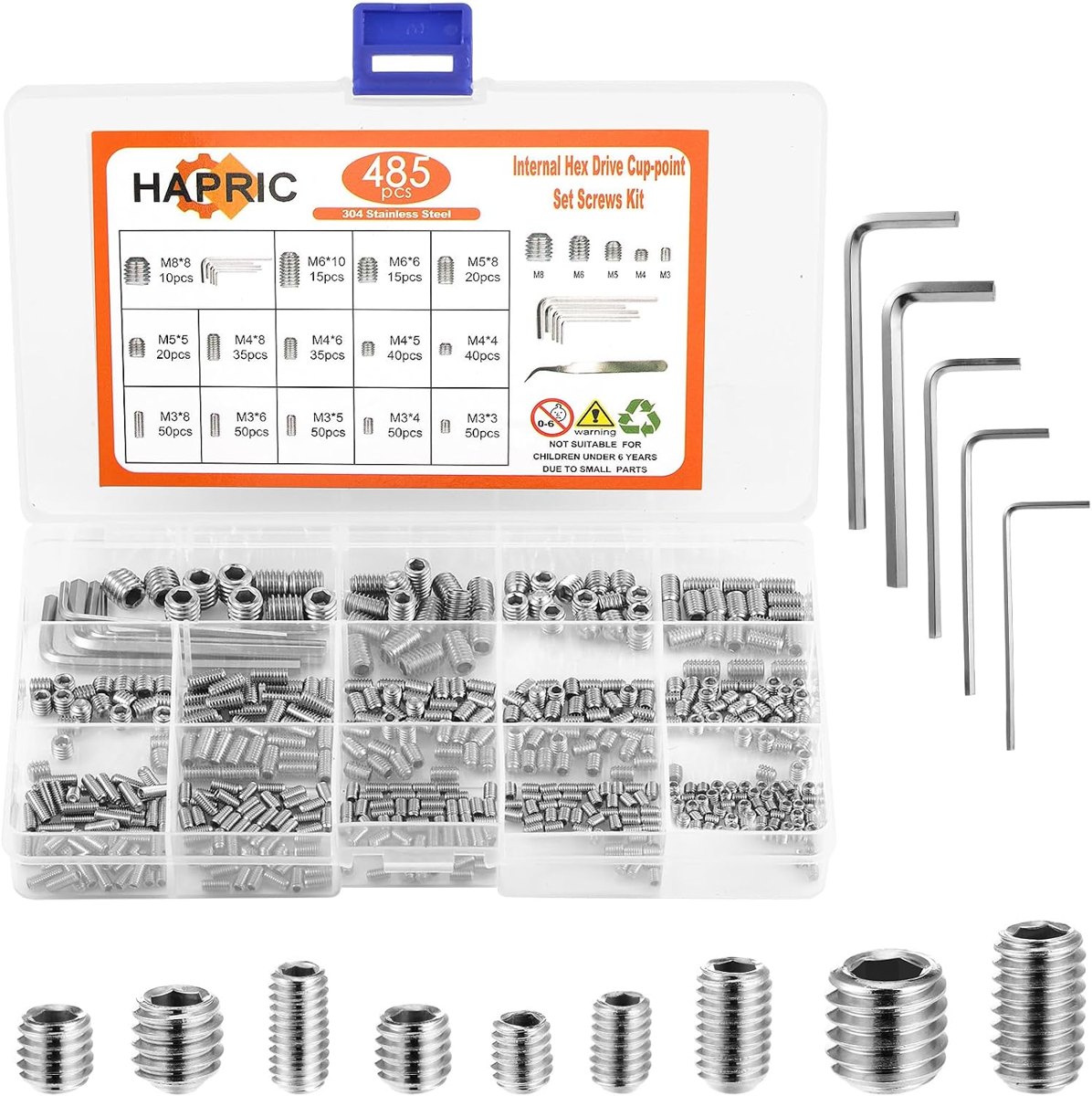
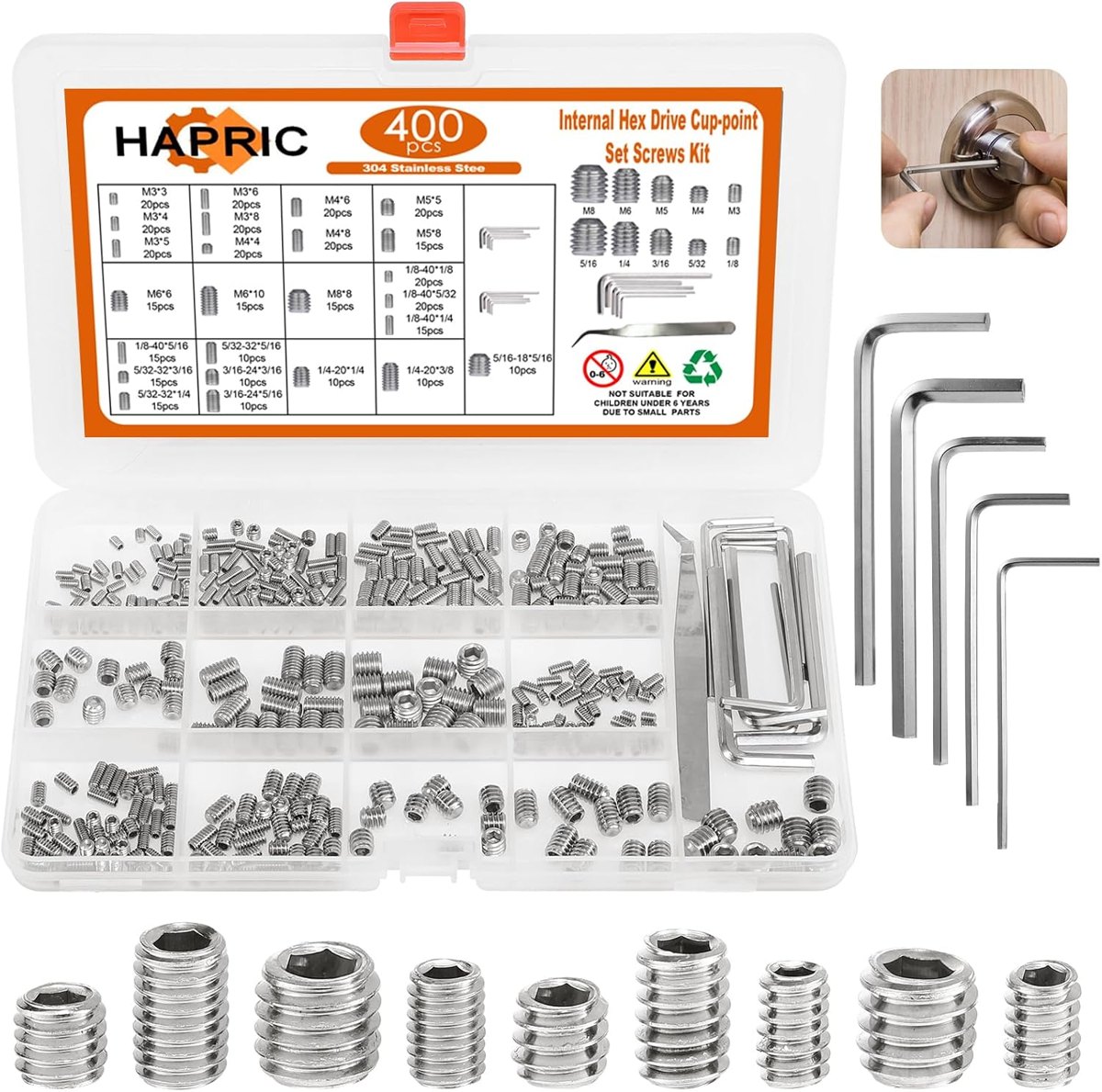
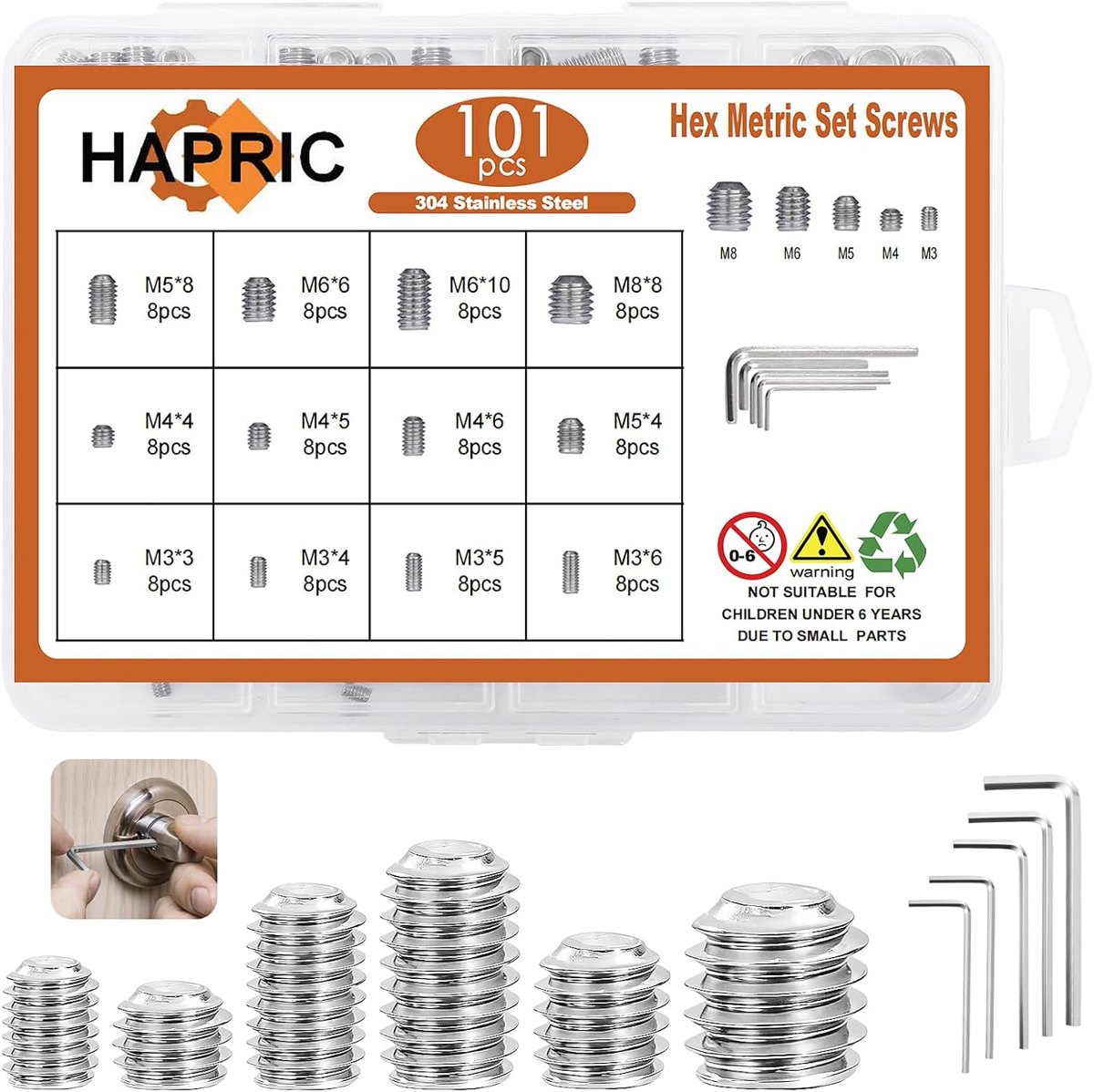
304 stainless steel resists rust with no coating, so it is the pick for faucets, shower valves, boat fittings and any fixture that sees water or steam. 12.9 alloy steel is harder and holds more torque; under black zinc it belongs on door levers, electronics, cameras and machine collars indoors. We make the 101-piece metric assortment and the 25-size metric-and-SAE assortment in both steels.
Finding the size that fell out
Measure the thread in the hole with the shank of a drill bit: the largest bit that slides in without catching is close to the minor diameter. Then try the next sizes up from the box; a set screw that starts by hand and seats with the key is the one. Domestic door and bath hardware is usually SAE between 1/8-40 and 1/4-20; imported fixtures and appliances are usually M3 to M6. The 25-size kits carry both families bagged separately in the same container.
Keep it from walking out again
Clean the shaft flat, seat the screw with the included hex key and add a drop of removable thread locker on handles that get turned all day. In our kits every size has its own bag, so the spare for next time is still labeled.